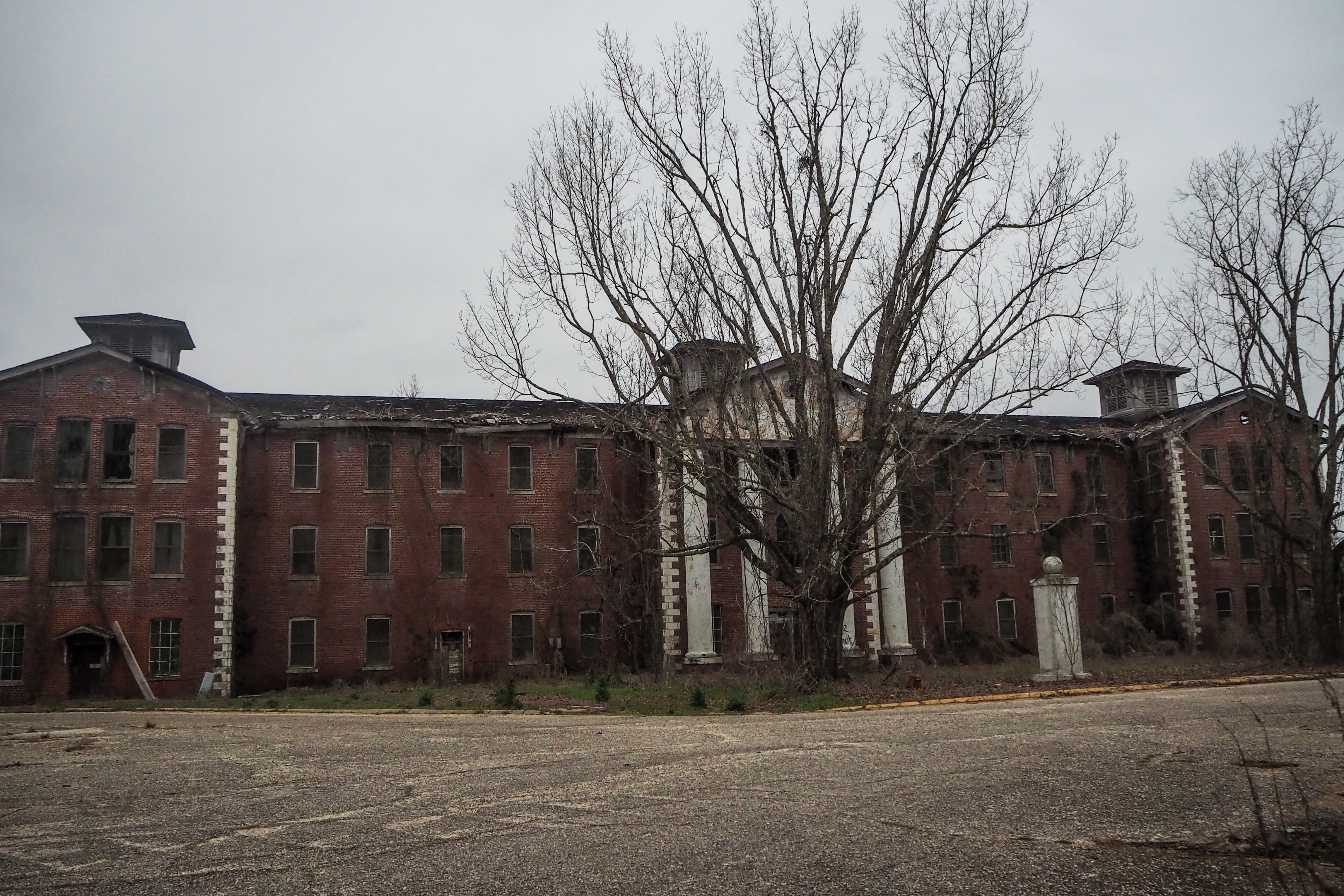
For those unfamiliar with the project, “Guest House” is is a visual archive that explores the history and mysteries of Alabama’s first and only asylum for mentally ill Black patients. You probably didn’t notice that I haven’t used the word “excited” about this project. To be blunt, this project was not enjoyable to make. It is has been fraught with depression and difficulty as it re-tells a dark history - a history I have often questioned telling at all, wondering if there is a point.
Without a doubt, the heaviest part of making a project like this has been acknowledging the potential for any of the problems revealed in the work to happen again, to happen to me, or to anyone. The South’s shadow side of history - the genocide in Gaza - those victim to current politically-empowered racism or mysogony - to heave a sigh of “glad it isn’t me” relief is short-term and fictional. There is truly no better way to say it than that “Injustice anywhere is a threat to justice everywhere” (MLK). If it can happen to anyone, it can happen to us, and likely our time is coming, because the pendulum always swings.
“We are caught in an inescapable network of mutuality, tied in a single garment of destiny. Whatever affects one directly, affects all indirectly.”
Rather than increase anxieties or foster hopelessness. I find this to be greater motivation to engage with the world around us, because every human on earth is self-interested, and we all have a stake in the game.
When asked why I’ve spent so much time, money, and emotional energy to create this work, the only answer I have thus far is because I felt like the work was given to me to do. No one else was going to do it, and no one could do it the way that I have. I resent the expectation to create “redemptive” work, to ascribe some grand ideal to what I am making. I believe in time the “purpose” (if any) reveals itself, and in some ways already has. Sometimes the only answer I can give is that this is my job. I document, I record, I tell. There is some kind of magic in surrendering to that and letting the work forge its own path.
In this way, I have been inspired by the story of Thomas Clarkson, who was encouraged by a teacher to enter an essay contest about the slave trade in the late 1700s. A simple essay assignment began a personal investigation by Thomas that would set the course for the rest of his life as a prominent abolitionist who played a vital role as a leading campaigner against the slave trade and slavery in Britain and the British empire. Thomas never set out to be relevant, purposeful, important, or revolutionary. But he showed up, did the work and followed where it lead him. This may not be the process for every artist, but it seems to be what is happening for me.